Many people are still convinced that a chemical peel can only be done in autumn or winter. A few years ago that really was justified. But aesthetic medicine has changed, and today many professional peels can be done safely even in summer.
The main thing is to choose the right type of peel, follow your aesthetic doctor’s recommendations and always use sunscreen.
Why wasn’t a peel recommended in summer before?
In the past, most chemical peels were quite aggressive. After the treatment the skin became very sensitive to ultraviolet light, and strong sun significantly increased the risk of dark spots.
That is why cosmetologists advised postponing treatments until autumn or winter.
Today the situation is completely different.
Modern peels have become much safer
In recent years, new generations of professional peels have appeared with a gentler effect on the skin.
They don’t cause marked damage to the surface layer of the skin, work in a more controlled way and allow treatments to be done almost all year round.
This is especially relevant for people in Moldova, where the summer sun gets very strong, but that is no longer an absolute contraindication for most modern superficial peels.
The main condition is that the treatment is performed by an aesthetic doctor after assessing the condition of the skin.
Some peels are especially beneficial in summer
In summer, the skin starts to work quite differently.
In high temperatures, the sebaceous glands become more active, an oily shine appears, pores widen, and inflammation and comedones form faster.
That is why in the warm season many clients need not to give up peels but, on the contrary, the right peel for them.
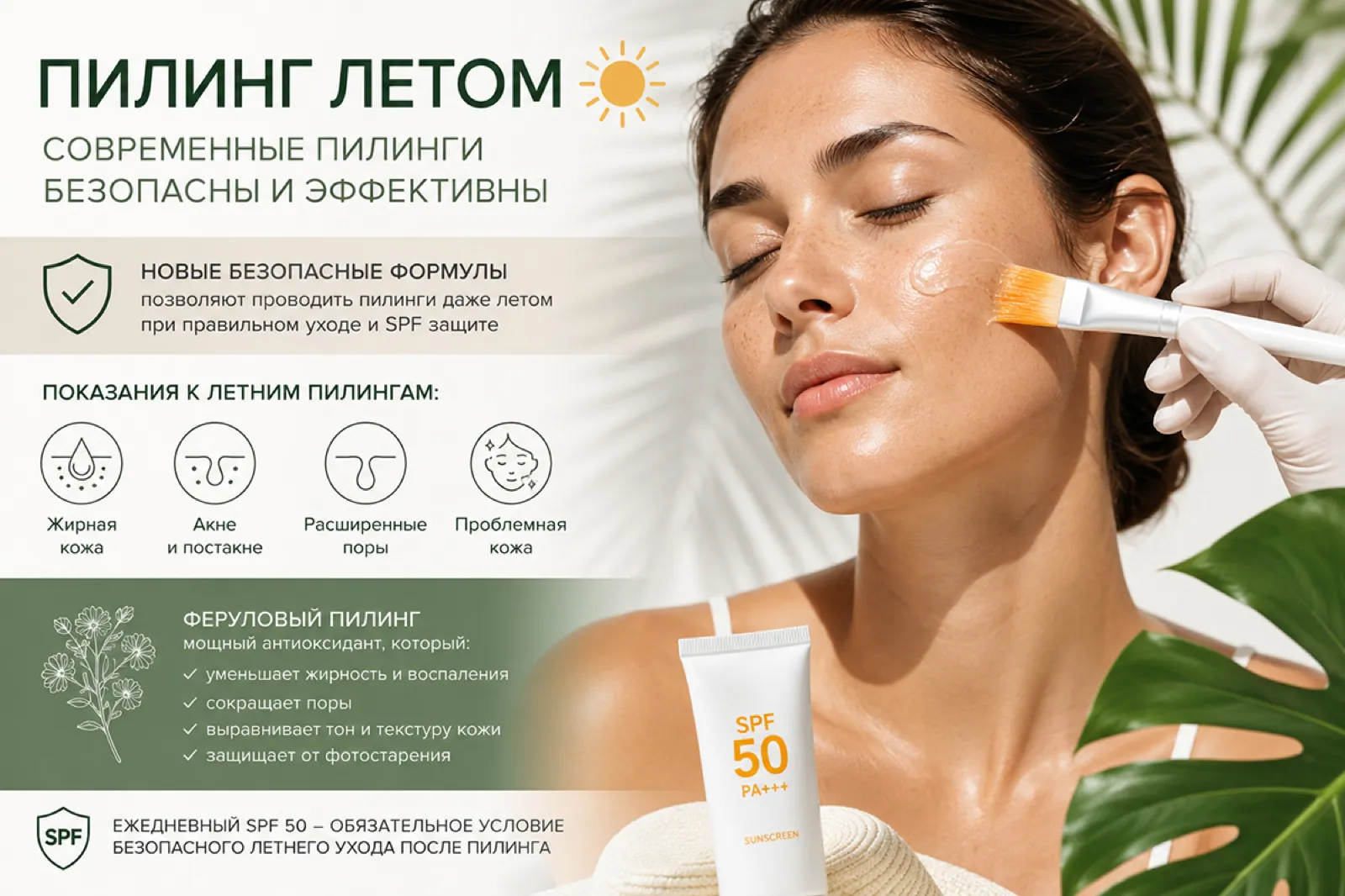
One of the most popular options is the ferulic peel.
Why is the ferulic peel considered one of the best for summer?
Ferulic acid is a powerful natural antioxidant.
It helps to:
- reduce oiliness;
- reduce inflammation;
- cleanse and narrow pores;
- lower the risk of new breakouts;
- reduce the effects of photoageing;
- even out skin tone;
- protect skin cells from the damaging effects of free radicals.
That is why ferulic peels often become part of summer care for problem and oily skin.
Who is a summer peel especially recommended for?
Modern summer peels are especially beneficial for clients who have:
- oily skin;
- acne;
- post-acne marks;
- enlarged pores;
- comedones;
- a dull complexion;
- increased sebum production;
- the first signs of photoageing.
In each case, the doctor chooses the concentration of acids and the number of treatments individually.
What about the sun?
This is the question clients ask most often.
In fact, modern recommendations are very simple.
After the treatment you need to:
- use SPF 50 sunscreen every day;
- reapply protection when spending a long time outdoors;
- avoid active sunbathing in the first days after the treatment;
- follow your doctor’s home care recommendations.
Today, using SPF has become as much of a habit as cleansing the skin every day. Today’s clients are much better informed: many use sun protection regularly, wear caps, wide-brimmed hats and sunglasses, and try to avoid long periods in direct sunlight at the hours of peak sun activity. That is why good care significantly reduces the risk of complications after a properly chosen summer peel.
Which peels shouldn’t be done in summer?
Despite everything modern aesthetic medicine can do, not all peels are suitable for the hot season.
Medium and deep peels, which cause marked flaking and a long recovery, are indeed most often best postponed to autumn and winter.
That is why the choice of treatment should always be made by a specialist after a consultation.
Summary
The myth that you can’t have a peel in summer is gradually becoming a thing of the past.
Modern professional formulas make it possible to safely perform many types of superficial chemical peels even in the hot season. What’s more, for oily, problem skin prone to acne and enlarged pores, a summer peel often becomes an important part of comprehensive treatment.
The main thing is not to choose the treatment yourself but to entrust the choice to an aesthetic doctor, who will assess the condition of your skin, choose a suitable formula and give advice on proper aftercare.